On May 11, Senator Ronald “Bato” dela Rosa walked back into the Senate after six months of hiding from an International Criminal Court arrest warrant. He resurfaced that same day to supply the crucial 13th vote that installed Alan Peter Cayetano as Senate President, then slipped out again. Three weeks later, the chamber that sheltered him cannot agree on who runs it.
The timing tells you what the fight is really about. The leadership war and the impeachment of Vice President Sara Duterte have been one and the same from the start.
Two power plays, one day
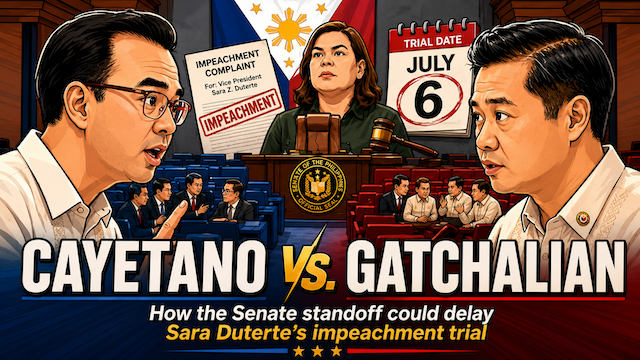
It all landed on May 11. Cayetano took the Senate gavel that afternoon, right as the House was voting to impeach Sara Duterte a second time, something no Philippine official had ever faced. The charges against her pile up, from confidential funds she’s accused of misusing to wealth she can’t account for, with bribery in the mix and, at the most serious end, an alleged plot to have President Marcos killed. While that played out in the House, Duterte’s allies in the Senate ousted Vicente “Tito” Sotto III and handed the presidency to Cayetano, one of their own. Few people in Manila read it as anything but a play to control the trial that was coming.
His new majority held on 13 votes, and one of them came from a senator the International Criminal Court wants for crimes against humanity. The court has named Dela Rosa a co-perpetrator in Rodrigo Duterte’s drug war. His warrant was issued in November, then unsealed on May 11, the same day his vote put Cayetano in the chair.
How Cayetano’s majority collapsed
Two of the 13 left the floor within weeks. Senator Jinggoy Estrada surrendered on June 1 after the Sandiganbayan ordered his arrest on a non-bailable plunder charge tied to the flood control scandal, and he was committed to the Quezon City Jail over an alleged P573 million in kickbacks. Dela Rosa went back into hiding. That left Cayetano with 11 senators who could actually appear, exact parity with the minority.
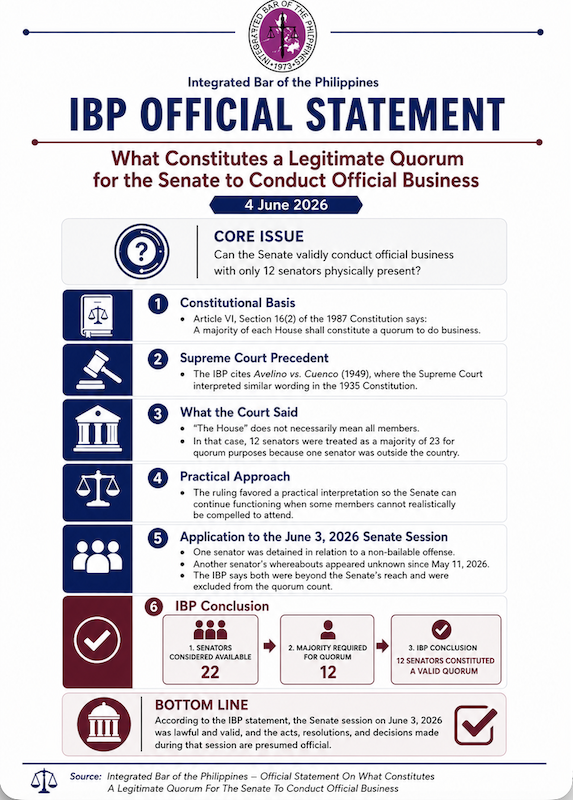
His bloc answered by boycotting two straight session days, denying the chamber the numbers to convene. The impasse broke on June 3, when Senator Chiz Escudero crossed over and gave the minority the 12 bodies it needed. They declared a quorum using a base of 22, citing the 1949 Supreme Court ruling in Avelino v. Cuenco, voted all positions vacant, and elected Sherwin Gatchalian acting Senate President.
Why Cayetano’s “Coup” claim is shaky
Cayetano calls the reorganization an illegal coup, but the precedent works against him. Avelino v. Cuenco held that a 12-senator quorum was valid because the absent members were beyond the chamber’s reach. The same reasoning was applied in 2015. The senators who validated that 2015 quorum, with three colleagues detained and others abroad, included Alan Peter Cayetano, Pia Cayetano, and Loren Legarda, the same people now calling 12 illegitimate.
There is also a complaint on record. On June 3, the civil society group Tindig Pilipinas filed an obstruction of justice complaint under Presidential Decree No. 1829 against Cayetano, Senator Robin Padilla, and suspended Sergeant-at-Arms Mao Aplasca over Dela Rosa’s escape from the Senate. The complainants include human rights workers and the families of drug-war victims.
What the gridlock is freezing
While the two camps trade memos, the work stops. On hold right now:
- The impeachment court. Conviction needs 16 of 24 senators and would remove Duterte and bar her from office, ending her 2028 run. That court cannot sit without a recognized chamber to seat it.
- Military and executive appointments, which stall while the leadership is in dispute.
- The Blue Ribbon inquiry into the flood control scandal, the chairmanship both blocs fought to control.
Two dates on a collision course
The impeachment trial is set to open on July 6. The chamber that has to run it adjourned sine die on June 3 with no one able to claim the gavel by the 13 votes the Constitution requires. By current reckoning, the Senate may have no elected president until late July unless President Marcos calls a special session.
So the calendar now sets two dates against each other, a trial that opens July 6 and a chamber that cannot seat a president before late July, and only the senators who broke the quorum can supply the 13th vote that would resolve it. Every day they hold out is another day the trial of the Vice President stays in a drawer.
About The Author

Noemi Lardizabal-Dado
Noemi Lardizabal-Dado is a content strategist with over 19 years of experience in blogging, content management, citizen advocacy, and media literacy, and over 30 years in web development. Otherwise known as @MomBlogger on social media, she believes in making a difference in the lives of her children by advocating for social change that benefits the greater good.
She is a co-founder and a member of the editorial board of Blog Watch . She is a resource speaker on media literacy, social media, blogging, digital citizenship, good governance, transparency, parenting, women’s rights, wellness, and cyber safety.
Her personal blogs such as aboutmyrecovery.com (parenting) , pinoyfoodblog.com (recipes), techiegadgets.com (gadgets) and benguetarabica.coffee keep her busy outside of Blog Watch.
Disclosure:
I am an advocate. I am NOT neutral. I will NOT give social media mileage to members of political clans, epal, a previous candidate for the same position and those I believe are a waste of taxpayers' money.
I do not support or belong to any political party. I was part of accredited media covering the Office of the Vice President and Leni Robredo as she ran as a presidential aspirant in the 2022 National and local elections.
On August 5, 2021, YouTube announced that I was selected as one of 50 Program participants of its Creator Program for Independent Journalists
She was a Senior Consultant for ALL media engagements for the PCOO-led Committee on Media Affairs & Strategic Communications (CMASC) under the ASEAN 2017 National Organizing Council from January 4 -July 5, 2017. Having been an ASEAN advocate since 2011, she has written extensively about the benefits of the ASEAN community and as a region of opportunities on Blog Watch and aboutmyrecovery.com.
Organization affiliation includes Consortium on Democracy and Disinformation
Updated June 6, 2022

Cayetano vs. Gatchalian: How the senate standoff could delay Sara Duterte’s impeachment trial
On May 11, Senator Ronald “Bato” dela Rosa walked back into the Senate after six months of hiding from an International Criminal Court arrest warrant. He resurfaced that same day to supply the crucial 13th vote that installed Alan Peter Cayetano as Senate President, then slipped out again. Three weeks later, the chamber that sheltered him cannot agree on who runs it.
The timing tells you what the fight is really about. The leadership war and the impeachment of Vice President Sara Duterte have been one and the same from the start.
Two power plays, one day
It all landed on May 11. Cayetano took the Senate gavel that afternoon, right as the House was voting to impeach Sara Duterte a second time, something no Philippine official had ever faced. The charges against her pile up, from confidential funds she’s accused of misusing to wealth she can’t account for, with bribery in the mix and, at the most serious end, an alleged plot to have President Marcos killed. While that played out in the House, Duterte’s allies in the Senate ousted Vicente “Tito” Sotto III and handed the presidency to Cayetano, one of their own. Few people in Manila read it as anything but a play to control the trial that was coming.
His new majority held on 13 votes, and one of them came from a senator the International Criminal Court wants for crimes against humanity. The court has named Dela Rosa a co-perpetrator in Rodrigo Duterte’s drug war. His warrant was issued in November, then unsealed on May 11, the same day his vote put Cayetano in the chair.
How Cayetano’s majority collapsed
Two of the 13 left the floor within weeks. Senator Jinggoy Estrada surrendered on June 1 after the Sandiganbayan ordered his arrest on a non-bailable plunder charge tied to the flood control scandal, and he was committed to the Quezon City Jail over an alleged P573 million in kickbacks. Dela Rosa went back into hiding. That left Cayetano with 11 senators who could actually appear, exact parity with the minority.
His bloc answered by boycotting two straight session days, denying the chamber the numbers to convene. The impasse broke on June 3, when Senator Chiz Escudero crossed over and gave the minority the 12 bodies it needed. They declared a quorum using a base of 22, citing the 1949 Supreme Court ruling in Avelino v. Cuenco, voted all positions vacant, and elected Sherwin Gatchalian acting Senate President.
Why Cayetano’s “Coup” claim is shaky
Cayetano calls the reorganization an illegal coup, but the precedent works against him. Avelino v. Cuenco held that a 12-senator quorum was valid because the absent members were beyond the chamber’s reach. The same reasoning was applied in 2015. The senators who validated that 2015 quorum, with three colleagues detained and others abroad, included Alan Peter Cayetano, Pia Cayetano, and Loren Legarda, the same people now calling 12 illegitimate.
There is also a complaint on record. On June 3, the civil society group Tindig Pilipinas filed an obstruction of justice complaint under Presidential Decree No. 1829 against Cayetano, Senator Robin Padilla, and suspended Sergeant-at-Arms Mao Aplasca over Dela Rosa’s escape from the Senate. The complainants include human rights workers and the families of drug-war victims.
What the gridlock is freezing
While the two camps trade memos, the work stops. On hold right now:
Two dates on a collision course
The impeachment trial is set to open on July 6. The chamber that has to run it adjourned sine die on June 3 with no one able to claim the gavel by the 13 votes the Constitution requires. By current reckoning, the Senate may have no elected president until late July unless President Marcos calls a special session.
So the calendar now sets two dates against each other, a trial that opens July 6 and a chamber that cannot seat a president before late July, and only the senators who broke the quorum can supply the 13th vote that would resolve it. Every day they hold out is another day the trial of the Vice President stays in a drawer.
Related Posts
It should be more fun for us #itsMoreFunInThePhilippines
How Powerful Religious Groups in the Philippines are Spreading Terror
The American Food Crisis: Rise of cancer food –fall of health food
About The Author
Noemi Lardizabal-Dado
Noemi Lardizabal-Dado is a content strategist with over 19 years of experience in blogging, content management, citizen advocacy, and media literacy, and over 30 years in web development. Otherwise known as @MomBlogger on social media, she believes in making a difference in the lives of her children by advocating for social change that benefits the greater good. She is a co-founder and a member of the editorial board of Blog Watch . She is a resource speaker on media literacy, social media, blogging, digital citizenship, good governance, transparency, parenting, women’s rights, wellness, and cyber safety. Her personal blogs such as aboutmyrecovery.com (parenting) , pinoyfoodblog.com (recipes), techiegadgets.com (gadgets) and benguetarabica.coffee keep her busy outside of Blog Watch. Disclosure: I am an advocate. I am NOT neutral. I will NOT give social media mileage to members of political clans, epal, a previous candidate for the same position and those I believe are a waste of taxpayers' money. I do not support or belong to any political party. I was part of accredited media covering the Office of the Vice President and Leni Robredo as she ran as a presidential aspirant in the 2022 National and local elections. On August 5, 2021, YouTube announced that I was selected as one of 50 Program participants of its Creator Program for Independent Journalists She was a Senior Consultant for ALL media engagements for the PCOO-led Committee on Media Affairs & Strategic Communications (CMASC) under the ASEAN 2017 National Organizing Council from January 4 -July 5, 2017. Having been an ASEAN advocate since 2011, she has written extensively about the benefits of the ASEAN community and as a region of opportunities on Blog Watch and aboutmyrecovery.com. Organization affiliation includes Consortium on Democracy and Disinformation Updated June 6, 2022