Day 4 of the Duterte Impeachment Trial: The Paperwork Cracks, the Assassin Still Missing
July 14, 2026
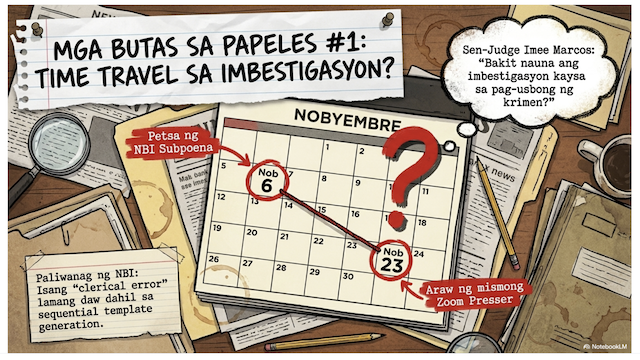
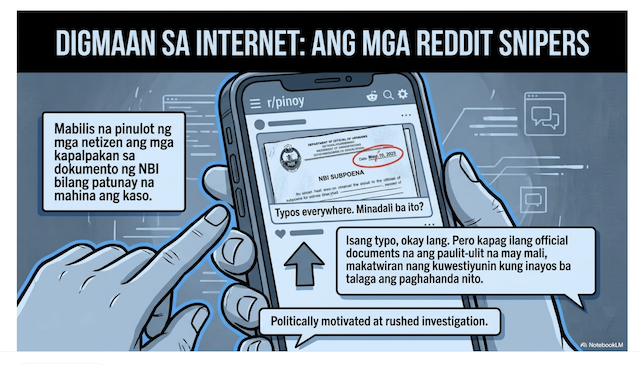
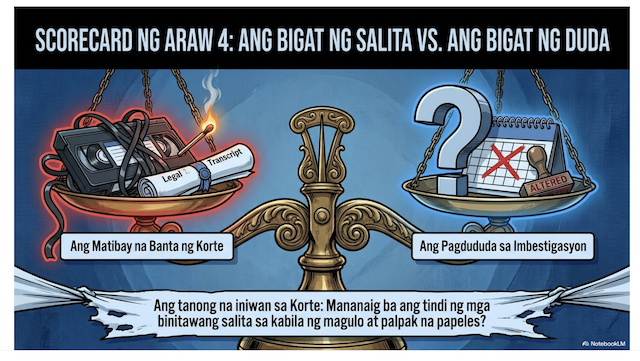
Two documents. Same wrong date. Signed by the same man. On the fourth day of Vice President Sara Duterte’s impeachment trial, Senator-Judge Imee Marcos held up National Bureau of Investigation regional director Jeremy Lotoc’s own paperwork and asked him to explain why an affidavit meant to be dated December 11, 2024, and the subpoena that came with it, both carried the date November 6, 2024, more than two weeks before the press conference they were investigating. Lotoc had no good answer. He called it a typo.
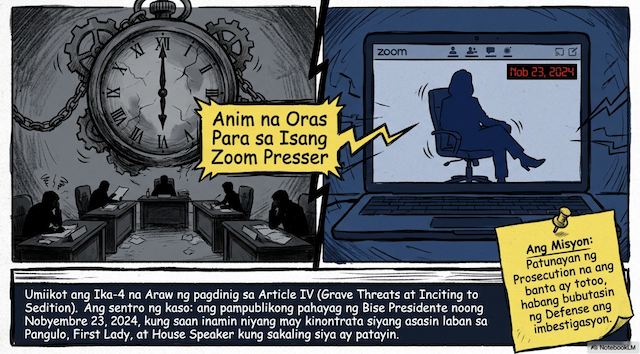
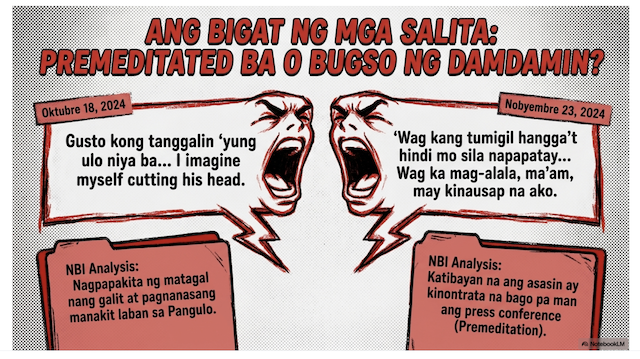
The July 13 session opened the trial’s second week, one stretch in what the Senate expects to run 92 days total, all centered on Article IV of the Articles of Impeachment: the charge that Duterte committed grave threats and incited sedition. Where does that charge come from? A November 23, 2024 online press conference, where she said she’d arranged to have President Ferdinand Marcos Jr., First Lady Liza Araneta-Marcos, and then-Speaker Martin Romualdez killed if she herself were assassinated. Prosecutors built their case around Lotoc’s testimony, arguing her statements were deliberate, and legally punishable, even though the person she claims to have contacted was never identified. Six hours later, past 8 p.m., that’s not quite where things landed. Both the paperwork and the missing-man question came out looking shakier than when the day began.
Day 4 at a Glance: Five Things That Happened
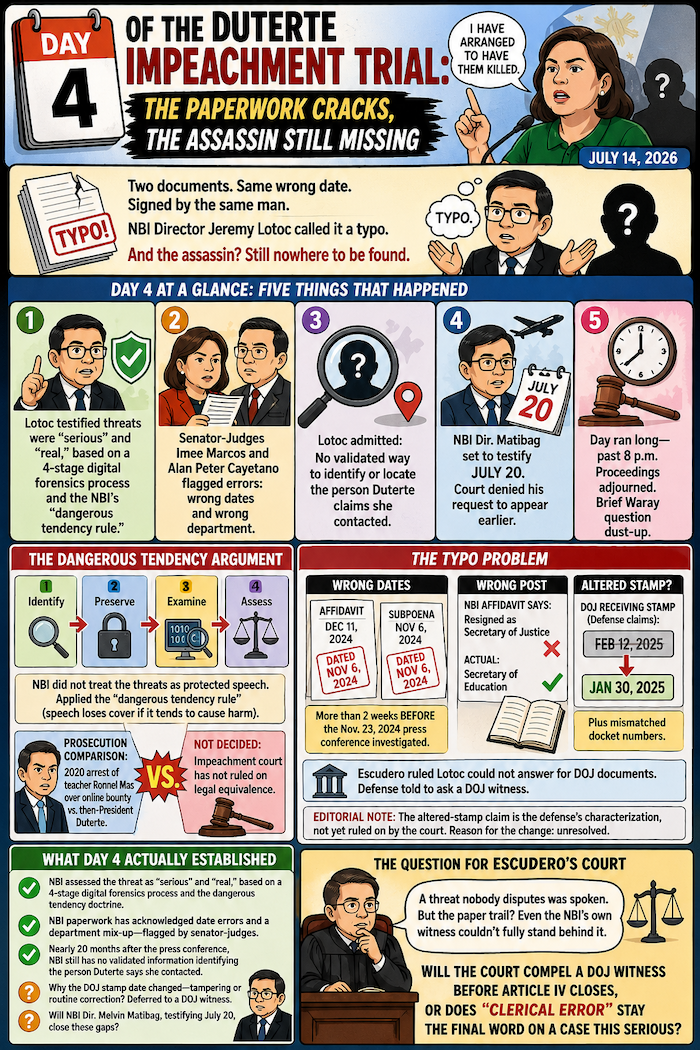
- Lotoc, the prosecution’s second witness, testified the threats were “serious” and “real,” grounding the finding in a four-stage digital forensics process and the NBI’s “dangerous tendency rule.”
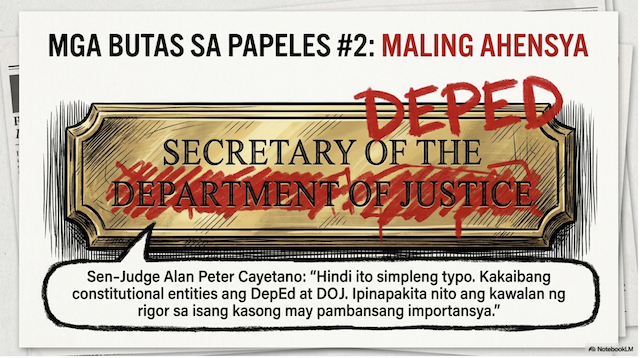
- Senator-Judges Imee Marcos and Alan Peter Cayetano flagged multiple errors in the NBI’s own paperwork: a subpoena and affidavit both misdated more than two weeks before the press conference they investigated, plus a line misstating which Cabinet post Duterte held.
- Under oath, Lotoc admitted the NBI still has no validated way to identify or locate the person Duterte claims she contacted. That’s her own factual claim, and nearly 20 months later, it’s still hanging there, unresolved.
- Matibag had asked to testify as early as July 14, so he could make an FBI-linked summit in Bangkok on July 21-22. Senator-Judge Alan Peter Cayetano and Senate President Sherwin Gatchalian weren’t having it, though, and objected to bumping him ahead of schedule. The court landed on July 20 instead, a date that, as it turns out, still gets him to Bangkok in time.
- The day ran long, past 8 p.m., in fact, before Senator Zubiri finally moved to adjourn, with senator-judges saying they simply couldn’t keep following the proceedings that late. Even before that, there’d been a brief dust-up over a prosecutor questioning the witness in Waray.
The Dangerous Tendency Argument
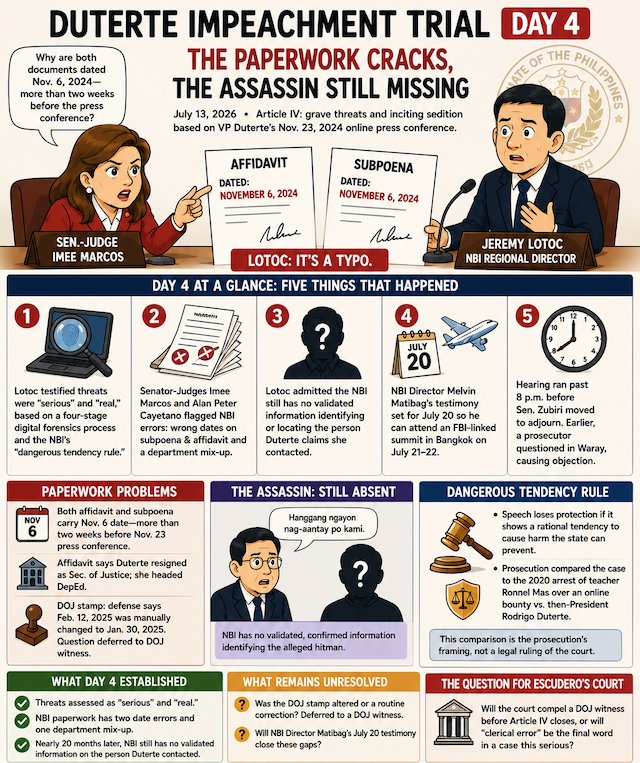
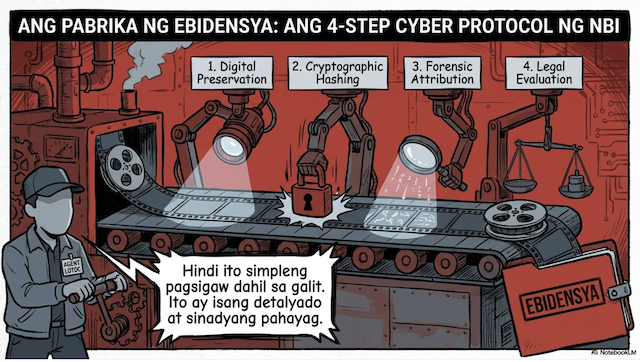
Lotoc, who ran the NBI’s Cybercrime Division when the investigation opened, described a four-stage process covering the identification, preservation, examination, and assessment of the digital material. He testified that the NBI did not treat Duterte’s statements as protected speech and applied what the bureau calls the “dangerous tendency rule” in its assessment, under which speech loses constitutional cover once it shows a rational tendency to produce a harm the state has a right to prevent. Prosecutors compared the case to the 2020 arrest of public school teacher Ronnel Mas over an online bounty directed at then-President Rodrigo Duterte, though that comparison is the prosecution’s framing, not a settled legal equivalence the impeachment court has ruled on.
The Typo Problem
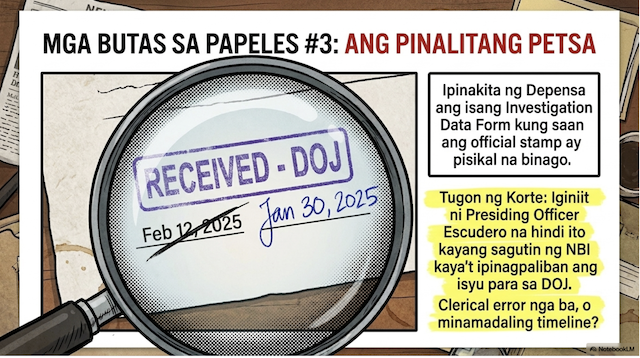
The paperwork told a rougher story. Beyond the mismatched November 6 date, Senator-Judge Alan Peter Cayetano flagged a line in the NBI’s own affidavit stating Duterte had resigned as Secretary of Justice, when she headed the Department of Education. Defense counsel Mark Vinluan also pointed to a DOJ receiving stamp that, he said, appears to have originally read February 12, 2025, before a manual marking changed it to January 30, 2025, the date the NBI’s complaint was first forwarded to the DOJ. He raised the discrepancy alongside mismatched docket numbers across the bureau’s filings. Presiding Officer Chiz Escudero repeatedly ruled that Lotoc could not answer for documents that belonged to the DOJ, not the NBI, and told the defense to bring those questions to a DOJ witness.
Editorial note: the altered-stamp claim is the defense’s characterization, made during cross-examination and not yet ruled on by the impeachment court. The hearing did not establish why the date changed or whether the change was improper.
And the assassin himself never surfaced. Under questioning from Senator-Judge Bam Aquino, Lotoc said the NBI has no validated, confirmed information identifying the person Duterte claimed to have contacted. “Hanggang ngayon nag-aantay po kami,” he said. We are still waiting.
What Day 4 Actually Established
- Confirmed: the NBI assessed the threat as “serious” and “real,” based on a four-stage digital forensics process and the dangerous tendency doctrine.
- Confirmed: NBI paperwork contains at least two acknowledged date errors and one department mix-up, flagged by senator-judges themselves, not only by the defense.
- Confirmed: nearly 20 months after the press conference that triggered the case, the NBI still has no validated information identifying the person Duterte says she contacted.
- Unresolved: whether the DOJ stamp the defense says was altered reflects tampering or a routine correction. That question was deferred to a DOJ witness who has not yet testified.
- Unresolved: whether NBI Director Melvin Matibag, now set to testify July 20 after the court denied his request to appear earlier, will close these gaps when he takes the stand.
The Question for Escudero’s Court
Lotoc could explain his own bureau’s evidence. He could not explain the Department of Justice’s documents, and presiding officer Escudero’s own rulings kept saying so, again and again, for most of a six-hour session. The court already knows where that answer sits: with a DOJ witness who has not yet been called. Until that person testifies, senator-judges are being asked to weigh a threat nobody disputes was spoken against a paper trail the bureau’s own witness could not fully stand behind. Does Escudero’s impeachment court compel a Department of Justice witness before Article IV closes, or does “clerical error” stay the final word on a case this serious?




Day 31 Sara Duterte Impeachment trial : Baste Duterte takes the stand as GenCorp ties come under scrutiny

Day 16 of Sara Duterte’s impeachment trial: Who handled the 500 million?
Day 9 of Sara Duterte Impeachment trial: The prosecution rests its threat case on the NBI’s word
About The Author

Noemi Lardizabal-Dado
Noemi Lardizabal-Dado is a content strategist with over 19 years of experience in blogging, content management, citizen advocacy, and media literacy, and over 30 years in web development. Otherwise known as @MomBlogger on social media, she believes in making a difference in the lives of her children by advocating for social change that benefits the greater good. She is a co-founder and a member of the editorial board of Blog Watch . She is a resource speaker on media literacy, social media, blogging, digital citizenship, good governance, transparency, parenting, women’s rights, wellness, and cyber safety. Her personal blogs such as aboutmyrecovery.com (parenting) , pinoyfoodblog.com (recipes), techiegadgets.com (gadgets) and benguetarabica.coffee keep her busy outside of Blog Watch. Disclosure: I am an advocate. I am NOT neutral. I will NOT give social media mileage to members of political clans, epal, a previous candidate for the same position and those I believe are a waste of taxpayers' money. I do not support or belong to any political party. I was part of accredited media covering the Office of the Vice President and Leni Robredo as she ran as a presidential aspirant in the 2022 National and local elections. On August 5, 2021, YouTube announced that I was selected as one of 50 Program participants of its Creator Program for Independent Journalists She was a Senior Consultant for ALL media engagements for the PCOO-led Committee on Media Affairs & Strategic Communications (CMASC) under the ASEAN 2017 National Organizing Council from January 4 -July 5, 2017. Having been an ASEAN advocate since 2011, she has written extensively about the benefits of the ASEAN community and as a region of opportunities on Blog Watch and aboutmyrecovery.com. Organization affiliation includes Consortium on Democracy and Disinformation Updated June 6, 2022