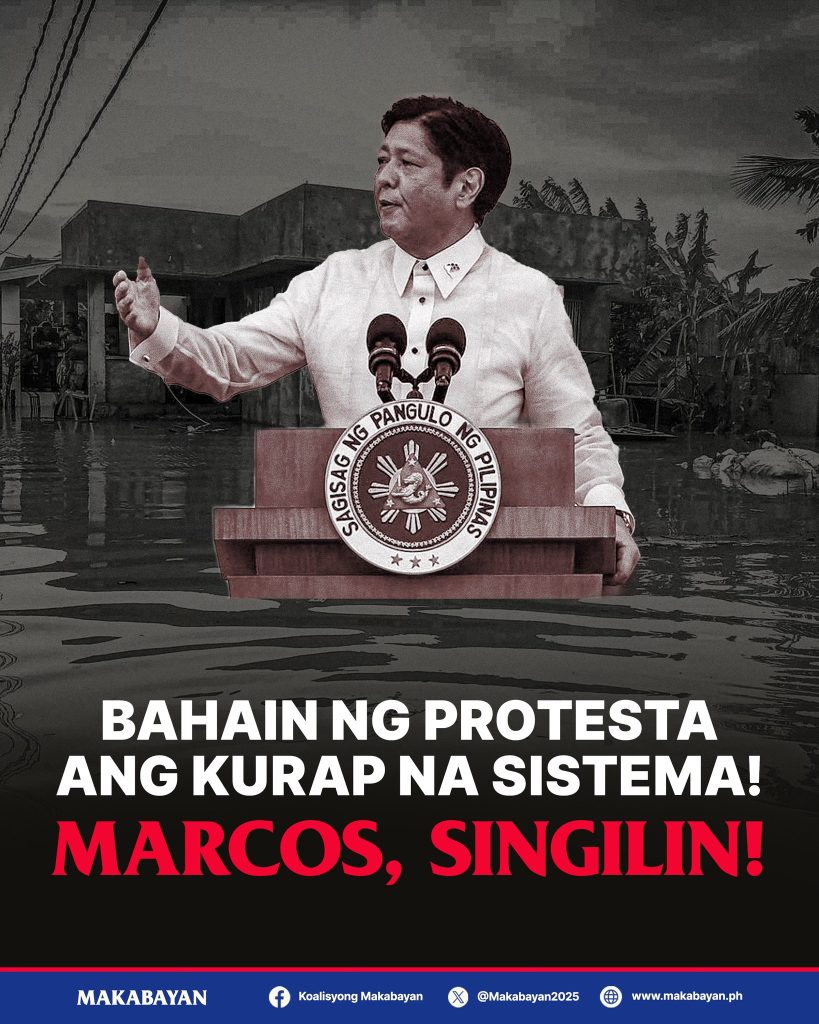
I came across the Facebook post of Renato Reyes and found myself agreeing.
Neither Marcos nor Duterte: Why systemic change remains the end goal in fighting corruption

Let me summarize Renato’s post here.
People love to frame it as a choice: Ferdinand Marcos Jr. or Rodrigo Duterte. Two sides of the same coin, really. Both sit on top of a political system soaked in corruption, where public office becomes a way to cash in instead of serve. They quarrel on the surface, sure, but their records and the deep ties around them say the same thing. Neither is the cure to what ails the Philippines.
Marcos: Keeping the Machine Running
Ferdinand Marcos Jr. is the one in charge today, which means the buck stops with him. He presides over what many call “bureaucrat capitalism,” a setup where public money is diverted for private gain. His job isn’t to fix a broken engine. It’s to keep it humming.
Start with the budget. He proposes it, and under his watch billions get steered into questionable projects. “Unprogrammed appropriations” have ballooned, while the old pork barrel logic survives. Lawmakers tuck pet projects into the budget and trade them for loyalty, and the cycle pays out. The same individuals who propose the project also stand to profit, creating an ideal environment for corruption.
Then there is the anti-corruption talk that doesn’t match the ledger. Marcos controls a huge P4.5 billion pot in confidential and intelligence funds, the biggest for any president, and he handed similar funds to Vice President Sara Duterte even without a line item for it. He also downplayed the issue of budget insertions, saying the real problem is execution, not size. That sounds like someone who knows what’s going on and lets it continue.
The backdrop matters. His political rise is tied to wealth the family never returned, pegged at over $10 billion. Sure, he may have placed Duterte at the Hague, but this does not absolve him. Marcos Jr. needs to return stolen wealth. He was also tagged in the 2013 pork barrel scandal, allegedly getting millions in kickbacks. Today’s moves look like a straight continuation of that history—plunder normalized, power abused.

Duterte: Different Presidency, Same Playbook
Rodrigo Duterte’s term didn’t look cleaner. It came with big scandals and familiar patterns.
The Pharmally mess during the pandemic showed how billions in emergency funds found their way to shady deals. His “war on drugs” brought thousands of deaths and opened doors for police corruption and extortion. The contractors who thrived on massive flood control projects under Marcos also did very well under Duterte. And now Sara Duterte faces scrutiny over confidential funds in her current office. The Duterte–Marcos partnership isn’t new; it’s a working alliance built on preserving a system that pays them back.
Why the Fix Has to Be Systemic
If anything, the back-and-forth between these families proves the point. Replacing one leader from the same ruling class with another won’t change outcomes. The problem is structural: imperialism, feudal relations, and a corrupt capitalist bureaucracy that keeps people poor while the connected get richer.
That is why the answer put forward is national democracy — a different way of organizing power and the economy:
- True sovereignty. Free the country from foreign control and influence.
- Real land reform. Break the feudal landowning setup that drives rural poverty.
- National industrialization. Build local industries to create jobs and real growth.
- Power to the oppressed. Put workers, farmers, and other marginalized sectors at the center, not the same political clans.
Fighting corruption cannot end with naming a few bad actors and moving on. It has to be a sustained, collective effort to dismantle the system that lets corruption thrive in the first place. Organize, mobilize, and build something better—a system where transparency and accountability aren’t slogans but the ground rules.
About The Author

Noemi Lardizabal-Dado
Noemi Lardizabal-Dado is a content strategist with over 19 years of experience in blogging, content management, citizen advocacy, and media literacy, and over 30 years in web development. Otherwise known as @MomBlogger on social media, she believes in making a difference in the lives of her children by advocating for social change that benefits the greater good.
She is a co-founder and a member of the editorial board of Blog Watch . She is a resource speaker on media literacy, social media, blogging, digital citizenship, good governance, transparency, parenting, women’s rights, wellness, and cyber safety.
Her personal blogs such as aboutmyrecovery.com (parenting) , pinoyfoodblog.com (recipes), techiegadgets.com (gadgets) and benguetarabica.coffee keep her busy outside of Blog Watch.
Disclosure:
I am an advocate. I am NOT neutral. I will NOT give social media mileage to members of political clans, epal, a previous candidate for the same position and those I believe are a waste of taxpayers' money.
I do not support or belong to any political party. I was part of accredited media covering the Office of the Vice President and Leni Robredo as she ran as a presidential aspirant in the 2022 National and local elections.
On August 5, 2021, YouTube announced that I was selected as one of 50 Program participants of its Creator Program for Independent Journalists
She was a Senior Consultant for ALL media engagements for the PCOO-led Committee on Media Affairs & Strategic Communications (CMASC) under the ASEAN 2017 National Organizing Council from January 4 -July 5, 2017. Having been an ASEAN advocate since 2011, she has written extensively about the benefits of the ASEAN community and as a region of opportunities on Blog Watch and aboutmyrecovery.com.
Organization affiliation includes Consortium on Democracy and Disinformation
Updated June 6, 2022

Marcos or Duterte? Why swapping faces won’t fix corruption
I came across the Facebook post of Renato Reyes and found myself agreeing.
Let me summarize Renato’s post here.
People love to frame it as a choice: Ferdinand Marcos Jr. or Rodrigo Duterte. Two sides of the same coin, really. Both sit on top of a political system soaked in corruption, where public office becomes a way to cash in instead of serve. They quarrel on the surface, sure, but their records and the deep ties around them say the same thing. Neither is the cure to what ails the Philippines.
Marcos: Keeping the Machine Running
Ferdinand Marcos Jr. is the one in charge today, which means the buck stops with him. He presides over what many call “bureaucrat capitalism,” a setup where public money is diverted for private gain. His job isn’t to fix a broken engine. It’s to keep it humming.
Start with the budget. He proposes it, and under his watch billions get steered into questionable projects. “Unprogrammed appropriations” have ballooned, while the old pork barrel logic survives. Lawmakers tuck pet projects into the budget and trade them for loyalty, and the cycle pays out. The same individuals who propose the project also stand to profit, creating an ideal environment for corruption.
Then there is the anti-corruption talk that doesn’t match the ledger. Marcos controls a huge P4.5 billion pot in confidential and intelligence funds, the biggest for any president, and he handed similar funds to Vice President Sara Duterte even without a line item for it. He also downplayed the issue of budget insertions, saying the real problem is execution, not size. That sounds like someone who knows what’s going on and lets it continue.
The backdrop matters. His political rise is tied to wealth the family never returned, pegged at over $10 billion. Sure, he may have placed Duterte at the Hague, but this does not absolve him. Marcos Jr. needs to return stolen wealth. He was also tagged in the 2013 pork barrel scandal, allegedly getting millions in kickbacks. Today’s moves look like a straight continuation of that history—plunder normalized, power abused.
Duterte: Different Presidency, Same Playbook
Rodrigo Duterte’s term didn’t look cleaner. It came with big scandals and familiar patterns.
The Pharmally mess during the pandemic showed how billions in emergency funds found their way to shady deals. His “war on drugs” brought thousands of deaths and opened doors for police corruption and extortion. The contractors who thrived on massive flood control projects under Marcos also did very well under Duterte. And now Sara Duterte faces scrutiny over confidential funds in her current office. The Duterte–Marcos partnership isn’t new; it’s a working alliance built on preserving a system that pays them back.
Why the Fix Has to Be Systemic
If anything, the back-and-forth between these families proves the point. Replacing one leader from the same ruling class with another won’t change outcomes. The problem is structural: imperialism, feudal relations, and a corrupt capitalist bureaucracy that keeps people poor while the connected get richer.
That is why the answer put forward is national democracy — a different way of organizing power and the economy:
Fighting corruption cannot end with naming a few bad actors and moving on. It has to be a sustained, collective effort to dismantle the system that lets corruption thrive in the first place. Organize, mobilize, and build something better—a system where transparency and accountability aren’t slogans but the ground rules.
Related Posts
Manoling Morato on Margie Juico and alleged PCSO anomalies
Gender Equality and Women’s Rights
Continued vigilance needed for #betterinternet in the Philippines
About The Author
Noemi Lardizabal-Dado
Noemi Lardizabal-Dado is a content strategist with over 19 years of experience in blogging, content management, citizen advocacy, and media literacy, and over 30 years in web development. Otherwise known as @MomBlogger on social media, she believes in making a difference in the lives of her children by advocating for social change that benefits the greater good. She is a co-founder and a member of the editorial board of Blog Watch . She is a resource speaker on media literacy, social media, blogging, digital citizenship, good governance, transparency, parenting, women’s rights, wellness, and cyber safety. Her personal blogs such as aboutmyrecovery.com (parenting) , pinoyfoodblog.com (recipes), techiegadgets.com (gadgets) and benguetarabica.coffee keep her busy outside of Blog Watch. Disclosure: I am an advocate. I am NOT neutral. I will NOT give social media mileage to members of political clans, epal, a previous candidate for the same position and those I believe are a waste of taxpayers' money. I do not support or belong to any political party. I was part of accredited media covering the Office of the Vice President and Leni Robredo as she ran as a presidential aspirant in the 2022 National and local elections. On August 5, 2021, YouTube announced that I was selected as one of 50 Program participants of its Creator Program for Independent Journalists She was a Senior Consultant for ALL media engagements for the PCOO-led Committee on Media Affairs & Strategic Communications (CMASC) under the ASEAN 2017 National Organizing Council from January 4 -July 5, 2017. Having been an ASEAN advocate since 2011, she has written extensively about the benefits of the ASEAN community and as a region of opportunities on Blog Watch and aboutmyrecovery.com. Organization affiliation includes Consortium on Democracy and Disinformation Updated June 6, 2022