The Supreme Court’s unanimous decision (Read the Supreme Court Decision ) on July 25, 2025, to halt the impeachment trial of Vice President Sara Duterte didn’t just close a case—it sent shockwaves through the country’s political landscape and, in my view, redrew the map for 2028. On paper, the Court was simply enforcing the Constitution: the one-year bar rule and due process were the pillars of its ruling. But let’s not pretend the effect was neutral. The message was so strong that it felt like an acquittal before any evidence was considered.
Listen to an audio version of the Supreme Court decision declaring the fourth impeachment complaint against VP Sara Duterte as “unconstitutional.”
Where law meets power?
The Court went out of its way to say impeachment is a constitutional process, even if politics drips from every part of it. That’s technically true. But by stepping in and halting the Senate trial, the Court didn’t just guard procedure—it reshaped the power dynamics three years before the next presidential election. I can accept that the justices saw themselves defending the Constitution, not Sara Duterte. But the reality is that legal rulings in this country never land in a vacuum, especially one this explosive.
The clock that stopped an impeachment
The one-year bar rule was the technical lifeline. Under the Constitution, you can’t initiate impeachment against the same official more than once in a year. The timing here was razor thin. Three complaints against Duterte were dismissed on February 5, 2025. On that very day, a fourth was transmitted to the Senate. For the Court, that was enough to pull the plug and say no new impeachment could begin until February 6, 2026.
Senator Risa Hontiveros pushed back, citing Gutierrez v. House of Representatives, which treated the one-year limit as about timing, not the number of complaints. I think she had a point. But the justices dug in, making it clear that in their reading, the clock—not the content—was what mattered.
Due process as a shield
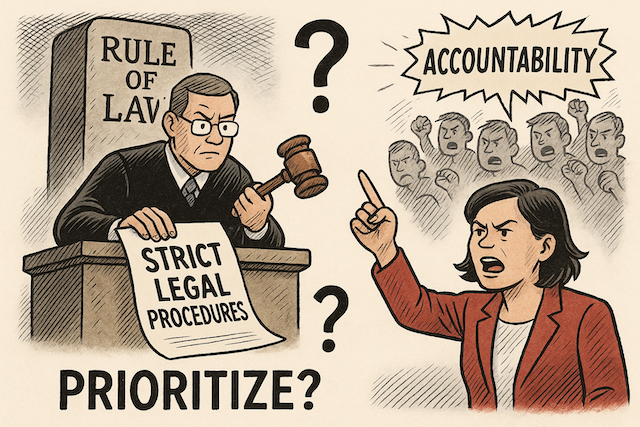
The other pillar was due process, and here I actually agree with the Court. Duterte was never given the draft Articles of Impeachment or a fair chance to respond. The House moved fast—too fast—and the ruling rightly called out the lack of real deliberation. Still, it’s hard not to notice how due process became both a sword and a shield in this case: a sword against a rushed House and a shield for a vice president fighting for her political survival.
A nation split on the verdict
The reactions were as divided as the country itself. Duterte’s allies declared victory for the rule of law. Senator Ronald “Bato” Dela Rosa even credited divine intervention. Imee Marcos urged everyone to move on. The Senate, perhaps relieved, acknowledged the Court’s authority, and Malacañang echoed calls to respect institutions.
On the other side, opposition voices didn’t mince words. Akbayan Rep. Chel Diokno called it “a loss for the people” and branded the Court a “Supreme Coddler.” Leila de Lima blasted the decision for hiding behind technicalities while sidestepping the heart of the allegations. Hontiveros warned it set a dangerous precedent, and social media lit up with anger. When ordinary Filipinos on X call it “a defeat for the people,” you know the ruling struck a nerve.
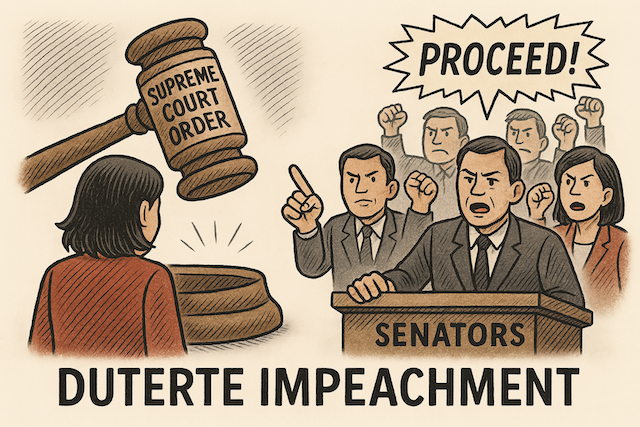
“Whether the Supreme Court made that decision or not, the impeachment court will proceed. We’ll proceed,” said Senator Joel Villanueva in a chance interview.
Political fallout and the Road to 2028
Step outside the legal arguments, and the political fallout is obvious. This was a huge win for Sara Duterte. The ruling erased what could have been a career-ending hurdle. As @zryancruz put it in The Greens, it was proof that the Dutertes still know how to flex political muscle at exactly the right moment. With Visayas and Mindanao locked in and her base energized, Duterte’s bloc now looks like the one to beat.
Meanwhile, the opposition looks scattered. Their failure to mount a visible show of force or even a united message is glaring. This isn’t just about protests in the streets; it’s about demonstrating that there’s a viable counterweight to Duterte’s camp. Right now, I’m not seeing it.
Marcos in the middle
President Marcos is in an uncomfortable spot. He’s trying to focus on governance and legacy, but this ruling strengthens the very political force that could threaten his hold on power in 2028. Analysts are already speculating on what another Duterte presidency could mean, including a potential foreign policy pivot back to Beijing and the ripple effects for the Philippines’ alliances in the West Philippine Sea. That’s not just theory; it’s a real strategic question hanging over the next three years.
This was never just legal
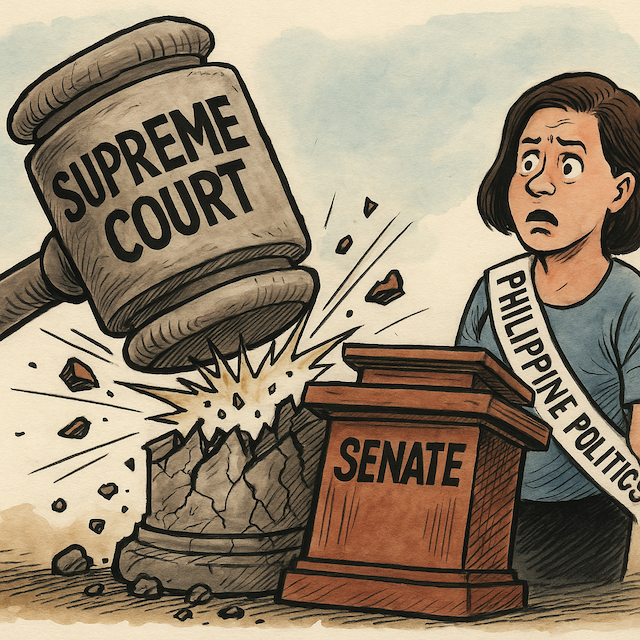
Here’s the thing: what the Supreme Court did wasn’t just legal—it was political, whether the justices admit it or not. By stepping into what many consider the Senate’s lane, the Court didn’t just stop an impeachment; it lit the fuse on the next phase of the power struggle. Technicalities trumped substance, and in doing so, the ruling quietly signaled where power sits right now.
It also shifted the accountability conversation. Instead of debating the allegations against Duterte, we’re talking about rules and procedure. Some see that as a victory for constitutional protections. Others see it as evidence that the same protections can be used as a weapon to evade examination. It forces the uncomfortable question: can our current system still hold the most powerful to account, and if so, who carries that burden—the courts, Congress, or the people? so, who carries that responsibility—the courts, Congress, or the people themselves?
The first move in a bigger fight
This ruling exposes the country’s old fractures, from the North-South divide to doubts about judicial independence. It reminds us that legal decisions aren’t self-contained—they ripple through politics, alliances, and public trust. Coming just three years before 2028 makes its weight even heavier.
Whether you see it as defending the Constitution or undermining justice, I can’t shake the sense that the decision was less of an ending and more of a beginning. The court may have stopped a trial, but it also set the tone for everything to come. The decision wasn’t just a ruling; it was the first move in a much bigger fight for the country’s future.
Listen to an audio overview : Sources of this Opinion Article
Images generated using ChatGPT
About The Author

Noemi Lardizabal-Dado
Noemi Lardizabal-Dado is a content strategist with over 19 years of experience in blogging, content management, citizen advocacy, and media literacy, and over 30 years in web development. Otherwise known as @MomBlogger on social media, she believes in making a difference in the lives of her children by advocating for social change that benefits the greater good.
She is a co-founder and a member of the editorial board of Blog Watch . She is a resource speaker on media literacy, social media, blogging, digital citizenship, good governance, transparency, parenting, women’s rights, wellness, and cyber safety.
Her personal blogs such as aboutmyrecovery.com (parenting) , pinoyfoodblog.com (recipes), techiegadgets.com (gadgets) and benguetarabica.coffee keep her busy outside of Blog Watch.
Disclosure:
I am an advocate. I am NOT neutral. I will NOT give social media mileage to members of political clans, epal, a previous candidate for the same position and those I believe are a waste of taxpayers' money.
I do not support or belong to any political party. I was part of accredited media covering the Office of the Vice President and Leni Robredo as she ran as a presidential aspirant in the 2022 National and local elections.
On August 5, 2021, YouTube announced that I was selected as one of 50 Program participants of its Creator Program for Independent Journalists
She was a Senior Consultant for ALL media engagements for the PCOO-led Committee on Media Affairs & Strategic Communications (CMASC) under the ASEAN 2017 National Organizing Council from January 4 -July 5, 2017. Having been an ASEAN advocate since 2011, she has written extensively about the benefits of the ASEAN community and as a region of opportunities on Blog Watch and aboutmyrecovery.com.
Organization affiliation includes Consortium on Democracy and Disinformation
Updated June 6, 2022

Supreme Court ruling on Sara Duterte impeachment reshapes Philippine politics
The Supreme Court’s unanimous decision (Read the Supreme Court Decision ) on July 25, 2025, to halt the impeachment trial of Vice President Sara Duterte didn’t just close a case—it sent shockwaves through the country’s political landscape and, in my view, redrew the map for 2028. On paper, the Court was simply enforcing the Constitution: the one-year bar rule and due process were the pillars of its ruling. But let’s not pretend the effect was neutral. The message was so strong that it felt like an acquittal before any evidence was considered.
Listen to an audio version of the Supreme Court decision declaring the fourth impeachment complaint against VP Sara Duterte as “unconstitutional.”
Where law meets power?
The Court went out of its way to say impeachment is a constitutional process, even if politics drips from every part of it. That’s technically true. But by stepping in and halting the Senate trial, the Court didn’t just guard procedure—it reshaped the power dynamics three years before the next presidential election. I can accept that the justices saw themselves defending the Constitution, not Sara Duterte. But the reality is that legal rulings in this country never land in a vacuum, especially one this explosive.
The clock that stopped an impeachment
The one-year bar rule was the technical lifeline. Under the Constitution, you can’t initiate impeachment against the same official more than once in a year. The timing here was razor thin. Three complaints against Duterte were dismissed on February 5, 2025. On that very day, a fourth was transmitted to the Senate. For the Court, that was enough to pull the plug and say no new impeachment could begin until February 6, 2026.
Senator Risa Hontiveros pushed back, citing Gutierrez v. House of Representatives, which treated the one-year limit as about timing, not the number of complaints. I think she had a point. But the justices dug in, making it clear that in their reading, the clock—not the content—was what mattered.
Due process as a shield
The other pillar was due process, and here I actually agree with the Court. Duterte was never given the draft Articles of Impeachment or a fair chance to respond. The House moved fast—too fast—and the ruling rightly called out the lack of real deliberation. Still, it’s hard not to notice how due process became both a sword and a shield in this case: a sword against a rushed House and a shield for a vice president fighting for her political survival.
A nation split on the verdict
The reactions were as divided as the country itself. Duterte’s allies declared victory for the rule of law. Senator Ronald “Bato” Dela Rosa even credited divine intervention. Imee Marcos urged everyone to move on. The Senate, perhaps relieved, acknowledged the Court’s authority, and Malacañang echoed calls to respect institutions.
On the other side, opposition voices didn’t mince words. Akbayan Rep. Chel Diokno called it “a loss for the people” and branded the Court a “Supreme Coddler.” Leila de Lima blasted the decision for hiding behind technicalities while sidestepping the heart of the allegations. Hontiveros warned it set a dangerous precedent, and social media lit up with anger. When ordinary Filipinos on X call it “a defeat for the people,” you know the ruling struck a nerve.
“Whether the Supreme Court made that decision or not, the impeachment court will proceed. We’ll proceed,” said Senator Joel Villanueva in a chance interview.
Political fallout and the Road to 2028
Step outside the legal arguments, and the political fallout is obvious. This was a huge win for Sara Duterte. The ruling erased what could have been a career-ending hurdle. As @zryancruz put it in The Greens, it was proof that the Dutertes still know how to flex political muscle at exactly the right moment. With Visayas and Mindanao locked in and her base energized, Duterte’s bloc now looks like the one to beat.
Meanwhile, the opposition looks scattered. Their failure to mount a visible show of force or even a united message is glaring. This isn’t just about protests in the streets; it’s about demonstrating that there’s a viable counterweight to Duterte’s camp. Right now, I’m not seeing it.
Marcos in the middle
President Marcos is in an uncomfortable spot. He’s trying to focus on governance and legacy, but this ruling strengthens the very political force that could threaten his hold on power in 2028. Analysts are already speculating on what another Duterte presidency could mean, including a potential foreign policy pivot back to Beijing and the ripple effects for the Philippines’ alliances in the West Philippine Sea. That’s not just theory; it’s a real strategic question hanging over the next three years.
This was never just legal
Here’s the thing: what the Supreme Court did wasn’t just legal—it was political, whether the justices admit it or not. By stepping into what many consider the Senate’s lane, the Court didn’t just stop an impeachment; it lit the fuse on the next phase of the power struggle. Technicalities trumped substance, and in doing so, the ruling quietly signaled where power sits right now.
It also shifted the accountability conversation. Instead of debating the allegations against Duterte, we’re talking about rules and procedure. Some see that as a victory for constitutional protections. Others see it as evidence that the same protections can be used as a weapon to evade examination. It forces the uncomfortable question: can our current system still hold the most powerful to account, and if so, who carries that burden—the courts, Congress, or the people? so, who carries that responsibility—the courts, Congress, or the people themselves?
The first move in a bigger fight
This ruling exposes the country’s old fractures, from the North-South divide to doubts about judicial independence. It reminds us that legal decisions aren’t self-contained—they ripple through politics, alliances, and public trust. Coming just three years before 2028 makes its weight even heavier.
Whether you see it as defending the Constitution or undermining justice, I can’t shake the sense that the decision was less of an ending and more of a beginning. The court may have stopped a trial, but it also set the tone for everything to come. The decision wasn’t just a ruling; it was the first move in a much bigger fight for the country’s future.
Listen to an audio overview : Sources of this Opinion Article
Images generated using ChatGPT
Related Posts
Twitter discussion: Fee controversy in New 7 Wonders’ contest
Duterte and the Failed Experiment
Creative solutions to worsening conditions along EDSA: The 40 km speed limit for buses, etc. (Part1/2)
About The Author
Noemi Lardizabal-Dado
Noemi Lardizabal-Dado is a content strategist with over 19 years of experience in blogging, content management, citizen advocacy, and media literacy, and over 30 years in web development. Otherwise known as @MomBlogger on social media, she believes in making a difference in the lives of her children by advocating for social change that benefits the greater good. She is a co-founder and a member of the editorial board of Blog Watch . She is a resource speaker on media literacy, social media, blogging, digital citizenship, good governance, transparency, parenting, women’s rights, wellness, and cyber safety. Her personal blogs such as aboutmyrecovery.com (parenting) , pinoyfoodblog.com (recipes), techiegadgets.com (gadgets) and benguetarabica.coffee keep her busy outside of Blog Watch. Disclosure: I am an advocate. I am NOT neutral. I will NOT give social media mileage to members of political clans, epal, a previous candidate for the same position and those I believe are a waste of taxpayers' money. I do not support or belong to any political party. I was part of accredited media covering the Office of the Vice President and Leni Robredo as she ran as a presidential aspirant in the 2022 National and local elections. On August 5, 2021, YouTube announced that I was selected as one of 50 Program participants of its Creator Program for Independent Journalists She was a Senior Consultant for ALL media engagements for the PCOO-led Committee on Media Affairs & Strategic Communications (CMASC) under the ASEAN 2017 National Organizing Council from January 4 -July 5, 2017. Having been an ASEAN advocate since 2011, she has written extensively about the benefits of the ASEAN community and as a region of opportunities on Blog Watch and aboutmyrecovery.com. Organization affiliation includes Consortium on Democracy and Disinformation Updated June 6, 2022