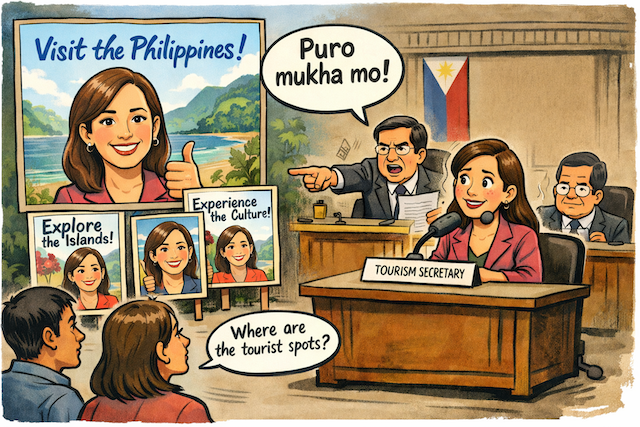
“Puro mukha mo.”
That line, thrown out during the Senate Committee on Tourism hearing on February 3, 2026, pretty much summed up what a lot of Filipinos have been saying about Tourism Secretary Christina Garcia Frasco’s very public style. Sometimes people say it nicely. Often they don’t. Either way, the point is the same: the destination should be the headline, but the official keeps ending up as the main image.
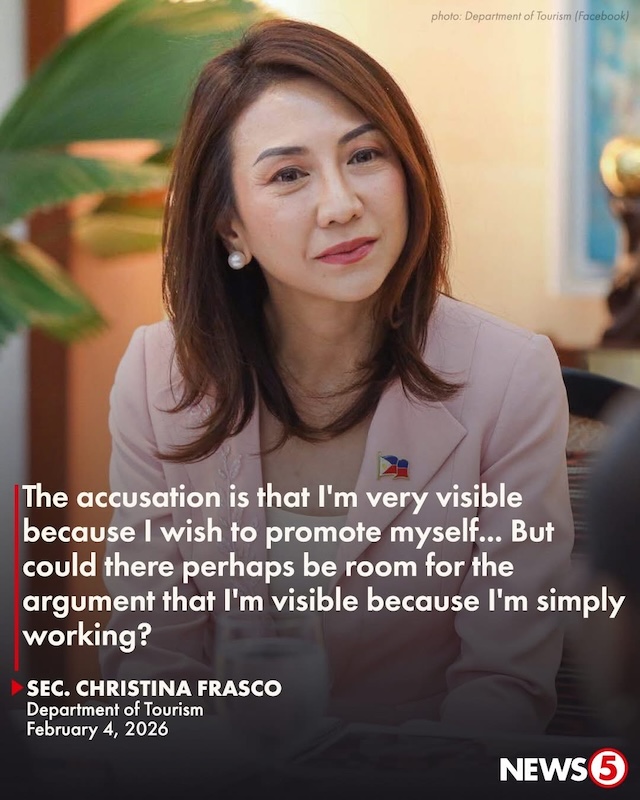
In Philippine political language, we have a word for this: epal. It is the habit of inserting yourself into everything so you can collect credit, attention, and recall.
Blogwatch has been tracking this behavior for a long time. Since 2012, we’ve had #epalwatch, as the pattern is older than any official and bigger than any agency.
This isn’t just about one secretary’s photo. It’s about how the government uses public money, public platforms, and public attention, and whether a tourism campaign is selling the Philippines, or selling a politician.
The epal problem isn’t new. The scale is.
What turned the issue into a national conversation wasn’t a single billboard. It was volume. Repeated images in tourism materials, welcome streamers, and publicity that looked more like a personality campaign than destination marketing. That’s why lawmakers treated it as more than aesthetics. It became a governance issue.
This is what epal does to public work. It shifts the spotlight from the service to the official, from outcomes to optics.
“Work photos” are not the same as campaign visuals
Frasco’s defense, as reported, is that these are “work photos.” Documentation of inspections, stakeholder meetings, and on-the-ground presence. She has also argued that visibility signals seriousness. The national government is here, paying attention.
That sounds reasonable until you apply one simple test.
If the photos were purely documentation, why do they keep appearing in materials meant to sell destinations?
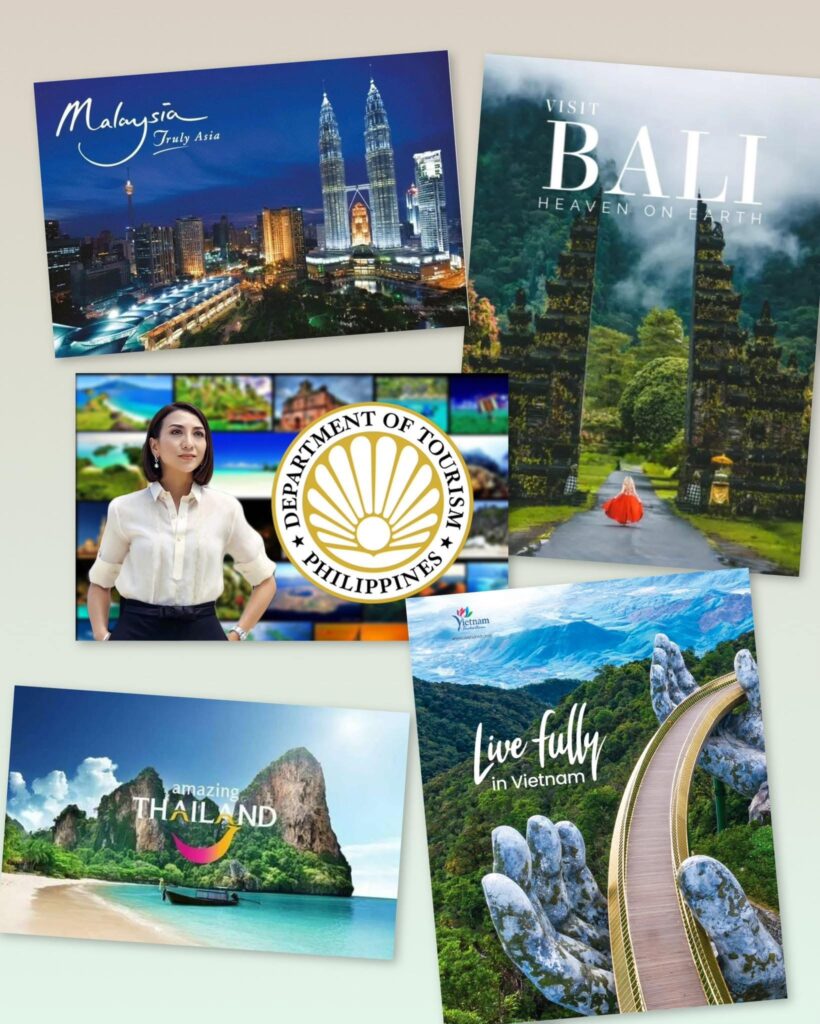
Tourism marketing has one job: make the place the hero. When the secretary’s face competes with the destination, the product gets smaller. And tourism is, at its core, a product story.
Philippine Topics and the optics that wouldn’t go away
What really lit the match was a free-distribution magazine called Philippine Topics. The first issue came out in December 2025 and put Frasco front and center on the cover, even though the magazine was meant to promote the Philippine Pavilion for Osaka Expo 2025 and the country’s tourism offerings.
The Department of Tourism, for its part, said it didn’t fund the magazine and didn’t direct it either. They also stressed it was a private publication.
That clarification matters. But it didn’t solve the bigger problem. The public had already seen the pattern, and the cover made the pattern easy to mock, repost, and remember.
In politics, the photo is never “just a photo.” It’s a signal.
When “branding” becomes a public expense problem
Here’s where it stops being a taste debate and becomes a taxpayer question.
After the Senate scrutiny, the government moved aggressively to enforce anti-epal rules. On January 31, 2026, the Department of the Interior and Local Government issued Memorandum Circular No. 2026-006, ordering the removal of officials’ names and images from government-funded projects and materials.
This wasn’t pulled out of thin air. It’s reinforced by the General Appropriations Act for Fiscal Year 2026 (Republic Act No. 12314), which includes provisions against plastering names, pictures, and similar identifiers on publicly funded programs and signboards.
In other words, even if you argue the photos are “work documentation,” the broader system is now drawing a harder line. Public programs are not personal billboards.
What gets lost when the official becomes the product
A secretary’s face doesn’t answer the questions real travelers ask.
Why go? What will I feel there? What’s distinct about this place?
At best, the official-centered visual adds noise. At worst, it tells foreigners and locals the same thing: this campaign is about power, not place.
And once a tourism brand becomes a personality brand, it inherits the worst risks of politics.
-
It invites the question every Filipino recognizes: “Sino’ng nagpapapogi?”
It distracts from results, because the conversation shifts to optics.
It becomes a target for ridicule, which spreads faster than any Department of Tourism media buy.
It becomes vulnerable to political fights.
What we should demand from the Department of Tourism
If we are serious about professional tourism promotion and serious about public trust, the standard should be simple. It should outlast any secretary.
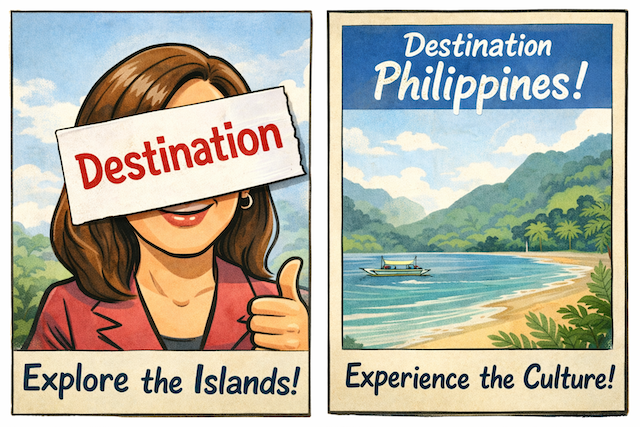
- Destination-first visuals. Landscapes, culture, communities, and experiences lead. Officials stay in internal documentation, not in campaign materials.
- Clear separation of channels. Governance reporting can show who did what. Marketing channels should sell the Philippines, not the officeholder.
- Publish the spend and approvals. Who commissioned the materials, who signed off, and what public funds were used.
- Treat epal as a red flag expense. Personalized publicity should trigger review, not applause.
- Use authentic assets. Let travelers, creators, and local communities produce the images that actually persuade people to visit.
The question Frasco can’t dodge, and neither can we
Tourism is one of the few areas where the Philippines can win without pretending. We have the beaches, the food, the festivals, the languages, the stories. The best marketing is the country itself.
So why did it take a Senate scolding, a DILG circular, and a budget-law warning for the Department of Tourism to remember that?
And the sharper question, for every agency watching this: when public communication starts looking like personal promotion, who benefits, and who pays?
About The Author

Noemi Lardizabal-Dado
Noemi Lardizabal-Dado is a content strategist with over 19 years of experience in blogging, content management, citizen advocacy, and media literacy, and over 30 years in web development. Otherwise known as @MomBlogger on social media, she believes in making a difference in the lives of her children by advocating for social change that benefits the greater good.
She is a co-founder and a member of the editorial board of Blog Watch . She is a resource speaker on media literacy, social media, blogging, digital citizenship, good governance, transparency, parenting, women’s rights, wellness, and cyber safety.
Her personal blogs such as aboutmyrecovery.com (parenting) , pinoyfoodblog.com (recipes), techiegadgets.com (gadgets) and benguetarabica.coffee keep her busy outside of Blog Watch.
Disclosure:
I am an advocate. I am NOT neutral. I will NOT give social media mileage to members of political clans, epal, a previous candidate for the same position and those I believe are a waste of taxpayers' money.
I do not support or belong to any political party. I was part of accredited media covering the Office of the Vice President and Leni Robredo as she ran as a presidential aspirant in the 2022 National and local elections.
On August 5, 2021, YouTube announced that I was selected as one of 50 Program participants of its Creator Program for Independent Journalists
She was a Senior Consultant for ALL media engagements for the PCOO-led Committee on Media Affairs & Strategic Communications (CMASC) under the ASEAN 2017 National Organizing Council from January 4 -July 5, 2017. Having been an ASEAN advocate since 2011, she has written extensively about the benefits of the ASEAN community and as a region of opportunities on Blog Watch and aboutmyrecovery.com.
Organization affiliation includes Consortium on Democracy and Disinformation
Updated June 6, 2022
When the campaign becomes the face: Christina Garcia Frasco and DOT’s epal optics
“Puro mukha mo.”
That line, thrown out during the Senate Committee on Tourism hearing on February 3, 2026, pretty much summed up what a lot of Filipinos have been saying about Tourism Secretary Christina Garcia Frasco’s very public style. Sometimes people say it nicely. Often they don’t. Either way, the point is the same: the destination should be the headline, but the official keeps ending up as the main image.
In Philippine political language, we have a word for this: epal. It is the habit of inserting yourself into everything so you can collect credit, attention, and recall.
Blogwatch has been tracking this behavior for a long time. Since 2012, we’ve had #epalwatch, as the pattern is older than any official and bigger than any agency.
This isn’t just about one secretary’s photo. It’s about how the government uses public money, public platforms, and public attention, and whether a tourism campaign is selling the Philippines, or selling a politician.
The epal problem isn’t new. The scale is.
What turned the issue into a national conversation wasn’t a single billboard. It was volume. Repeated images in tourism materials, welcome streamers, and publicity that looked more like a personality campaign than destination marketing. That’s why lawmakers treated it as more than aesthetics. It became a governance issue.
This is what epal does to public work. It shifts the spotlight from the service to the official, from outcomes to optics.
“Work photos” are not the same as campaign visuals
Frasco’s defense, as reported, is that these are “work photos.” Documentation of inspections, stakeholder meetings, and on-the-ground presence. She has also argued that visibility signals seriousness. The national government is here, paying attention.
That sounds reasonable until you apply one simple test.
If the photos were purely documentation, why do they keep appearing in materials meant to sell destinations?
Tourism marketing has one job: make the place the hero. When the secretary’s face competes with the destination, the product gets smaller. And tourism is, at its core, a product story.
Philippine Topics and the optics that wouldn’t go away
What really lit the match was a free-distribution magazine called Philippine Topics. The first issue came out in December 2025 and put Frasco front and center on the cover, even though the magazine was meant to promote the Philippine Pavilion for Osaka Expo 2025 and the country’s tourism offerings.
The Department of Tourism, for its part, said it didn’t fund the magazine and didn’t direct it either. They also stressed it was a private publication.
That clarification matters. But it didn’t solve the bigger problem. The public had already seen the pattern, and the cover made the pattern easy to mock, repost, and remember.
In politics, the photo is never “just a photo.” It’s a signal.
When “branding” becomes a public expense problem
Here’s where it stops being a taste debate and becomes a taxpayer question.
After the Senate scrutiny, the government moved aggressively to enforce anti-epal rules. On January 31, 2026, the Department of the Interior and Local Government issued Memorandum Circular No. 2026-006, ordering the removal of officials’ names and images from government-funded projects and materials.
This wasn’t pulled out of thin air. It’s reinforced by the General Appropriations Act for Fiscal Year 2026 (Republic Act No. 12314), which includes provisions against plastering names, pictures, and similar identifiers on publicly funded programs and signboards.
In other words, even if you argue the photos are “work documentation,” the broader system is now drawing a harder line. Public programs are not personal billboards.
What gets lost when the official becomes the product
A secretary’s face doesn’t answer the questions real travelers ask.
Why go? What will I feel there? What’s distinct about this place?
At best, the official-centered visual adds noise. At worst, it tells foreigners and locals the same thing: this campaign is about power, not place.
And once a tourism brand becomes a personality brand, it inherits the worst risks of politics.
It invites the question every Filipino recognizes: “Sino’ng nagpapapogi?”
It distracts from results, because the conversation shifts to optics.
It becomes a target for ridicule, which spreads faster than any Department of Tourism media buy.
It becomes vulnerable to political fights.
What we should demand from the Department of Tourism
If we are serious about professional tourism promotion and serious about public trust, the standard should be simple. It should outlast any secretary.
The question Frasco can’t dodge, and neither can we
Tourism is one of the few areas where the Philippines can win without pretending. We have the beaches, the food, the festivals, the languages, the stories. The best marketing is the country itself.
So why did it take a Senate scolding, a DILG circular, and a budget-law warning for the Department of Tourism to remember that?
And the sharper question, for every agency watching this: when public communication starts looking like personal promotion, who benefits, and who pays?
Related Posts
Ombudsman resolution on GMA plunder case should send chilling effect on heads of agencies…and even COA
On Sotto’s Plagiarism: Either he resigns…or he resigns
Transcript & Photos: President Aquino’s Second State of the Nation Address
About The Author
Noemi Lardizabal-Dado
Noemi Lardizabal-Dado is a content strategist with over 19 years of experience in blogging, content management, citizen advocacy, and media literacy, and over 30 years in web development. Otherwise known as @MomBlogger on social media, she believes in making a difference in the lives of her children by advocating for social change that benefits the greater good. She is a co-founder and a member of the editorial board of Blog Watch . She is a resource speaker on media literacy, social media, blogging, digital citizenship, good governance, transparency, parenting, women’s rights, wellness, and cyber safety. Her personal blogs such as aboutmyrecovery.com (parenting) , pinoyfoodblog.com (recipes), techiegadgets.com (gadgets) and benguetarabica.coffee keep her busy outside of Blog Watch. Disclosure: I am an advocate. I am NOT neutral. I will NOT give social media mileage to members of political clans, epal, a previous candidate for the same position and those I believe are a waste of taxpayers' money. I do not support or belong to any political party. I was part of accredited media covering the Office of the Vice President and Leni Robredo as she ran as a presidential aspirant in the 2022 National and local elections. On August 5, 2021, YouTube announced that I was selected as one of 50 Program participants of its Creator Program for Independent Journalists She was a Senior Consultant for ALL media engagements for the PCOO-led Committee on Media Affairs & Strategic Communications (CMASC) under the ASEAN 2017 National Organizing Council from January 4 -July 5, 2017. Having been an ASEAN advocate since 2011, she has written extensively about the benefits of the ASEAN community and as a region of opportunities on Blog Watch and aboutmyrecovery.com. Organization affiliation includes Consortium on Democracy and Disinformation Updated June 6, 2022