By the end of 2025, information was not the problem.
Senate hearings were livestreamed. Testimonies circulated in real time. Court rulings were dissected on social media before official statements were even issued. Documents moved faster through group chats than through formal channels. One Senate hearing clip, replayed thousands of times in a single afternoon, outpaced the release of its official transcript by days.
What this year made clear is something more unsettling: exposure no longer leads to consequence by default.
Hearings everywhere, endings nowhere

The Senate was busy in 2025, particularly on issues of disinformation and public trust.
During hearings on fake news and coordinated online manipulation, lawmakers acknowledged what most citizens already understood. False content spreads faster than corrections. Platforms reward outrage. Trust in institutions is thin.
What was missing was clarity on outcomes.
Discussions gravitated toward content moderation and platform responsibility, but stopped short of answering harder questions:
Who decides what enforcement looks like?
How do safeguards avoid becoming tools for political control?
What restores credibility when official information is already distrusted?
The hearings named the problem. They did not resolve it.
Confidential funds and accountability by procedure
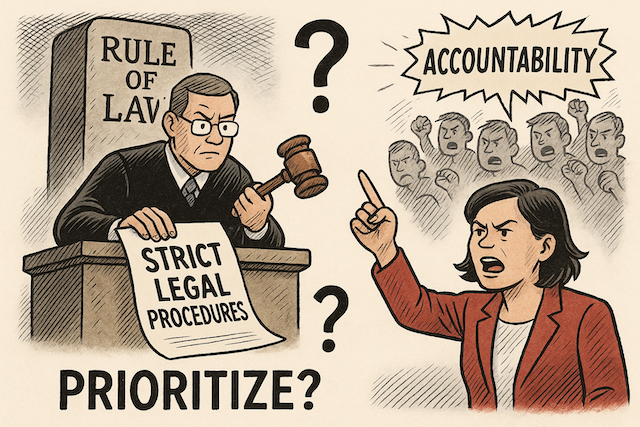
The issue of confidential and intelligence funds followed the country through much of the year, culminating in impeachment efforts against Vice President Sara Duterte.
The allegations were serious. The public interest was clear. But the process stalled.
The Supreme Court’s intervention rested on constitutional and procedural grounds, effectively ending the proceedings before the substantive issues could be tested. The ruling may have satisfied legal requirements, but it left a familiar public reaction in its wake: accountability had once again been blocked by technicalities.
In effect, the decision answered how impeachment must proceed but not whether the accusations themselves deserved full examination.
In 2025, the question was no longer whether procedures matter. It was whether procedures have become the last line of defense against scrutiny.
Flood control, COA reports, and anger that refused to stay online

Few issues captured public frustration as clearly as flood control.
Commission on Audit findings and Senate inquiries revived long-standing concerns over allegedly substandard or nonexistent projects, despite billions in public spending. For communities that flooded yet again during the rainy season, these were not abstract failures. They were physical reminders of what happens when oversight collapses.
The “Baha sa Luneta” protest marked a turning point. It was not simply a symbolic act. It was an expression of accumulated anger from people who had heard the same explanations after every storm and watched the same investigations fade once the water receded.
Flood control failures make corruption visible. Water enters homes. Livelihoods are lost. Children wade through streets that were supposed to have been protected years ago.
Investigations were promised again. What people wanted was simpler and harder: a clear accounting of responsibility.
International justice and the limits of recognition

In November, the International Criminal Court Appeals Chamber denied former President Rodrigo Duterte’s request for interim release.
For families of victims of the so-called war on drugs, the ruling carried weight. It affirmed that international scrutiny had not disappeared, even when domestic processes stalled.
At the same time, it underscored another reality of 2025: when accountability comes, it often arrives slowly, from outside the country, and long after the damage has been done.
Recognition is not the same as closure.
Predictable power, quiet participation

Across these episodes, a pattern emerged. Outcomes felt expected.
Hearings exposed. Courts ruled on process. Protests erupted. Power largely held.
This predictability reshaped participation. Many citizens did not disengage; they recalibrated. Political conversations moved into Messenger threads, Viber groups, and smaller platforms where persuasion felt possible and less performative.
Institutions continued to speak in press briefings. Citizens responded elsewhere.
What 2025 leaves unresolved
This was a year rich in revelations and poor in resolution.
From disinformation hearings, to the halted impeachment over confidential funds, to flood control scandals and international court rulings, the message was consistent: truth surfaced, consequences lagged.
As 2026 approaches, the question is no longer whether Filipinos are paying attention.
It is whether accountability mechanisms still know what to do after everything has already been exposed.
And if they don’t, what are citizens expected to wait for next?
About The Author

Noemi Lardizabal-Dado
Noemi Lardizabal-Dado is a content strategist with over 19 years of experience in blogging, content management, citizen advocacy, and media literacy, and over 30 years in web development. Otherwise known as @MomBlogger on social media, she believes in making a difference in the lives of her children by advocating for social change that benefits the greater good.
She is a co-founder and a member of the editorial board of Blog Watch . She is a resource speaker on media literacy, social media, blogging, digital citizenship, good governance, transparency, parenting, women’s rights, wellness, and cyber safety.
Her personal blogs such as aboutmyrecovery.com (parenting) , pinoyfoodblog.com (recipes), techiegadgets.com (gadgets) and benguetarabica.coffee keep her busy outside of Blog Watch.
Disclosure:
I am an advocate. I am NOT neutral. I will NOT give social media mileage to members of political clans, epal, a previous candidate for the same position and those I believe are a waste of taxpayers' money.
I do not support or belong to any political party. I was part of accredited media covering the Office of the Vice President and Leni Robredo as she ran as a presidential aspirant in the 2022 National and local elections.
On August 5, 2021, YouTube announced that I was selected as one of 50 Program participants of its Creator Program for Independent Journalists
She was a Senior Consultant for ALL media engagements for the PCOO-led Committee on Media Affairs & Strategic Communications (CMASC) under the ASEAN 2017 National Organizing Council from January 4 -July 5, 2017. Having been an ASEAN advocate since 2011, she has written extensively about the benefits of the ASEAN community and as a region of opportunities on Blog Watch and aboutmyrecovery.com.
Organization affiliation includes Consortium on Democracy and Disinformation
Updated June 6, 2022
2025: Exposure was easy. Accountability was not.
By the end of 2025, information was not the problem.
Senate hearings were livestreamed. Testimonies circulated in real time. Court rulings were dissected on social media before official statements were even issued. Documents moved faster through group chats than through formal channels. One Senate hearing clip, replayed thousands of times in a single afternoon, outpaced the release of its official transcript by days.
What this year made clear is something more unsettling: exposure no longer leads to consequence by default.
Hearings everywhere, endings nowhere
The Senate was busy in 2025, particularly on issues of disinformation and public trust.
During hearings on fake news and coordinated online manipulation, lawmakers acknowledged what most citizens already understood. False content spreads faster than corrections. Platforms reward outrage. Trust in institutions is thin.
What was missing was clarity on outcomes.
Discussions gravitated toward content moderation and platform responsibility, but stopped short of answering harder questions:
Who decides what enforcement looks like?
How do safeguards avoid becoming tools for political control?
What restores credibility when official information is already distrusted?
The hearings named the problem. They did not resolve it.
Confidential funds and accountability by procedure
The issue of confidential and intelligence funds followed the country through much of the year, culminating in impeachment efforts against Vice President Sara Duterte.
The allegations were serious. The public interest was clear. But the process stalled.
The Supreme Court’s intervention rested on constitutional and procedural grounds, effectively ending the proceedings before the substantive issues could be tested. The ruling may have satisfied legal requirements, but it left a familiar public reaction in its wake: accountability had once again been blocked by technicalities.
In effect, the decision answered how impeachment must proceed but not whether the accusations themselves deserved full examination.
In 2025, the question was no longer whether procedures matter. It was whether procedures have become the last line of defense against scrutiny.
Flood control, COA reports, and anger that refused to stay online
Few issues captured public frustration as clearly as flood control.
Commission on Audit findings and Senate inquiries revived long-standing concerns over allegedly substandard or nonexistent projects, despite billions in public spending. For communities that flooded yet again during the rainy season, these were not abstract failures. They were physical reminders of what happens when oversight collapses.
The “Baha sa Luneta” protest marked a turning point. It was not simply a symbolic act. It was an expression of accumulated anger from people who had heard the same explanations after every storm and watched the same investigations fade once the water receded.
Flood control failures make corruption visible. Water enters homes. Livelihoods are lost. Children wade through streets that were supposed to have been protected years ago.
Investigations were promised again. What people wanted was simpler and harder: a clear accounting of responsibility.
International justice and the limits of recognition
In November, the International Criminal Court Appeals Chamber denied former President Rodrigo Duterte’s request for interim release.
For families of victims of the so-called war on drugs, the ruling carried weight. It affirmed that international scrutiny had not disappeared, even when domestic processes stalled.
At the same time, it underscored another reality of 2025: when accountability comes, it often arrives slowly, from outside the country, and long after the damage has been done.
Recognition is not the same as closure.
Predictable power, quiet participation
Across these episodes, a pattern emerged. Outcomes felt expected.
Hearings exposed. Courts ruled on process. Protests erupted. Power largely held.
This predictability reshaped participation. Many citizens did not disengage; they recalibrated. Political conversations moved into Messenger threads, Viber groups, and smaller platforms where persuasion felt possible and less performative.
Institutions continued to speak in press briefings. Citizens responded elsewhere.
What 2025 leaves unresolved
This was a year rich in revelations and poor in resolution.
From disinformation hearings, to the halted impeachment over confidential funds, to flood control scandals and international court rulings, the message was consistent: truth surfaced, consequences lagged.
As 2026 approaches, the question is no longer whether Filipinos are paying attention.
It is whether accountability mechanisms still know what to do after everything has already been exposed.
And if they don’t, what are citizens expected to wait for next?
Related Posts
The Pork Barrel Scam: Getting Away with Billion of Pesos (Part 1 of 3 parts) #PDAFscam
Why we need to be so hard on the prosecutors (2/2)
The day after: thoughts on the Senate Hearing on Fake News (Part 2)
About The Author
Noemi Lardizabal-Dado
Noemi Lardizabal-Dado is a content strategist with over 19 years of experience in blogging, content management, citizen advocacy, and media literacy, and over 30 years in web development. Otherwise known as @MomBlogger on social media, she believes in making a difference in the lives of her children by advocating for social change that benefits the greater good. She is a co-founder and a member of the editorial board of Blog Watch . She is a resource speaker on media literacy, social media, blogging, digital citizenship, good governance, transparency, parenting, women’s rights, wellness, and cyber safety. Her personal blogs such as aboutmyrecovery.com (parenting) , pinoyfoodblog.com (recipes), techiegadgets.com (gadgets) and benguetarabica.coffee keep her busy outside of Blog Watch. Disclosure: I am an advocate. I am NOT neutral. I will NOT give social media mileage to members of political clans, epal, a previous candidate for the same position and those I believe are a waste of taxpayers' money. I do not support or belong to any political party. I was part of accredited media covering the Office of the Vice President and Leni Robredo as she ran as a presidential aspirant in the 2022 National and local elections. On August 5, 2021, YouTube announced that I was selected as one of 50 Program participants of its Creator Program for Independent Journalists She was a Senior Consultant for ALL media engagements for the PCOO-led Committee on Media Affairs & Strategic Communications (CMASC) under the ASEAN 2017 National Organizing Council from January 4 -July 5, 2017. Having been an ASEAN advocate since 2011, she has written extensively about the benefits of the ASEAN community and as a region of opportunities on Blog Watch and aboutmyrecovery.com. Organization affiliation includes Consortium on Democracy and Disinformation Updated June 6, 2022